- 0 Comments
- Uncategorized

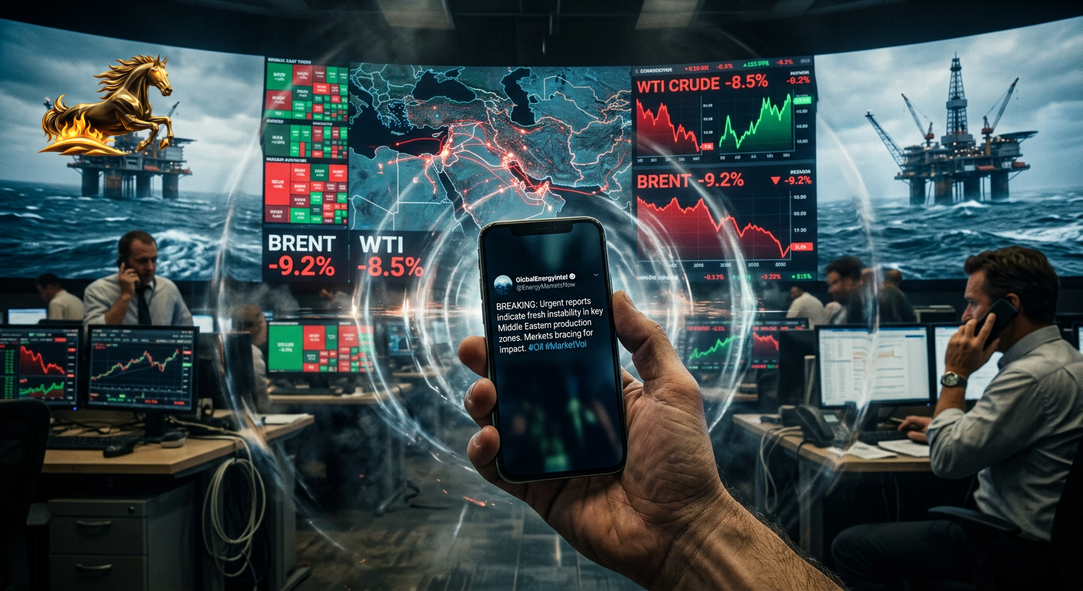
Picture waking up, glancing at oil prices, and seeing them swing wildly—not from a war, pipeline blast, or OPEC move, but due to a single tweet. That’s exactly what happened when a brief post from a senior U.S. official stated that the Navy had successfully escorted an oil tanker through the Strait of Hormuz, a critical chokepoint for global energy. Minutes later, the tweet was deleted and denied, sparking chaos in oil futures markets.
This episode isn’t just market trivia. It underscores how today’s oil markets are shaped as much by information—and perceived information—as by actual supply and demand. For anyone tracking or investing in oil and energy markets, grasping this dynamic is vital.
The tweet, attributed to a U.S. Energy Secretary, claimed a Navy escort through the Strait of Hormuz—the narrow passage between Iran and Oman through which roughly 20–25% of global seaborne oil trade and substantial LNG volumes pass. News that tanker traffic was “secured” amid regional frictions implied easing supply risks.
In calmer times, traders might wait for confirmation. But with geopolitical tensions high, even a quick, official-sounding post acted as a potent signal. It temporarily lowered the market’s risk premium—the “fear factor”—sending U.S. crude futures prices down as much as 19%.
Then the tweet disappeared, the White House denied it, and prices reversed—but the volatility was unleashed.
The key takeaway? In high-stakes markets, perceived information can move oil prices as powerfully as confirmed facts.
The Strait of Hormuz isn’t just a route; it’s a strategic lifeline. Connecting Persian Gulf oil giants like Saudi Arabia and the UAE with global markets, disruption here ripples globally.
Disruptions mean:
Alternate pipelines exist but can’t replace the massive volume flowing here. So, even hints of changing risks in this corridor send immediate price signals—as the tweet momentarily did.
Unlike slower news cycles of the past, today’s oil markets respond in seconds. A tweet appears, algorithms scan keywords like “Strait of Hormuz” or “Navy,” automated systems trade instantly, and prices adjust.
During the short life of the post, U.S. crude futures plunged sharply before partly rebounding once the claim was denied. Such double-digit intraday swings are rare, usually tied to physical events—not social media posts.
This shows market moves depend on who shares the info, existing fears, automated trading reactions, and how fast the facts can be checked.
Many think oil prices simply reflect current supply and demand. In truth, they forecast the future—production, geopolitical shifts, sanctions, economic growth, weather, and more.
When that tweet hinted at smoother tanker passage, perceived risks temporarily dropped, dragging prices down. Once denied, uncertainty surged, sending prices back up. Oil trades beliefs about future realities as much as the realities themselves.
In today’s noisy info landscape, credibility is king. A rumor from an unknown source is ignored, but a statement from a senior official assumes authority and accuracy. Traders act swiftly—even if errors occur.
Deleting the tweet added confusion, hinting at internal error or sensitivity, triggering more volatility. Markets despise ambiguity, especially amid geopolitical crises.
Algorithmic trading dominates financial markets, instantly reacting to sensitive keywords. References to “Strait of Hormuz” or “Navy” can trigger automated cascades without human review.
While boosting speed and efficiency, this also intensifies fragility, as fast, synchronized trades can cause liquidity to dry up and prices to swing sharply—fueling volatile feedback loops.
Oil itself is tangible, but today information about oil acts like a commodity. Its value lies in shaping risk assessments, hedging, and speculation.
With social media, news alerts, and AI-generated summaries, info spreads faster than verification. This can fuel price moves on incomplete or false data—the deleted tweet exemplifies this risk.
For investors, verifying news before acting is crucial to avoid costly portfolio shocks.
Oil supply concentrates in geopolitically tense regions. The Middle East, especially the Gulf and Strait of Hormuz, faces military tensions, sanctions, and diplomacy shifts.
As the IMF highlights, conflicts here don’t just affect energy prices but cascade through global supply chains, currencies, and inflation—impacting even those far from oil trading floors.
Hence, oil markets react intensely to geopolitical signals, even fleeting tweets.
In rapid markets, waiting for full confirmation risks missing the move. Traders weigh acting too late versus acting on uncertain info. Official sources are often treated as credible enough to prompt quick trades.
Verification follows, but price action happens first. This timing gap reveals vulnerabilities in today’s information-driven trading.
This episode reveals a fragile market structure. Speed and efficiency are strengths—until premature info spreads, magnifying losses and volatility.
For official entities, it underscores the need for strict communication controls. Market-moving statements require the same rigor as formal reports.
You might not trade oil futures directly, but energy prices affect your portfolio through stocks, bonds, ETFs, and everyday costs. Keep these in mind:
Officials need to understand how quickly their words move markets. To reduce confusion and instability, agencies should:
Simply deleting messages isn’t enough—transparency and timely clarifications maintain trust.
Financial educators and content creators face challenges explaining fast-moving, complex stories. Good communication should:
Using this tweet story to highlight real-time effects of info, geopolitical risk, and AI trading can inform effectively.
You may not watch oil prices, but you feel them—in fuel, transport, food costs, and inflation. The global oil network and digital info flow are tightly linked; a single social media message can eventually affect your wallet.
Recognizing this connection helps understand why distant events have local impacts.
Taking down a tweet doesn’t erase its market effects. Once out there, reactions linger.
In fact, deletion can deepen uncertainty and volatility, highlighting the need for prompt, clear communication over silence.
AI makes it easier to create realistic fake messages; markets are faster and more automated. This raises the risk of sudden, misleading shocks.
Preventing these requires stronger verification, cooperation among news organizations, regulators, and increased public awareness.
Balance between speed and trust is crucial.
The deleted tweet that rattled oil markets wasn’t just a slip—it revealed how intertwined information, technology, and geopolitics shape modern oil prices. Official statements, geopolitical tensions, and algorithmic trading instantly mold expectations that move billions.
For all—from investors to policymakers to everyday people—the lesson is clear:
In today’s fast-moving information economy, understanding the story behind the price is as vital as watching the price itself.
Sometimes, the most powerful force driving oil markets isn’t the barrels of oil—but the information—and how we respond to it.
