
Why Middle East Calm Is Driving Oil Prices
Why Middle East Calm Is Driving Oil Prices Down — Explained in a 1-Minute Vertical Video
Oil prices constantly shift due to many factors: supply and demand, inventories, interest rates, currency changes, OPEC+ policies, weather, refinery status, and the global economy. But one big driver that quickly moves oil markets is geopolitical tension in the Middle East.
When conflicts flare up in this vital region, traders immediately worry: Could supply be at risk? Even a small chance of disruption often sends oil prices soaring as markets price in possible shortages. On the flip side, when the Middle East enjoys calm—no conflict threats, open shipping routes, and stable supply expectations—those worries fade, and oil prices tend to drop.
That’s why calm in the Middle East acts as a powerful force pushing oil prices lower.
Understanding this link helps consumers, businesses, and investors make sense of oil price swings. Lower oil costs can translate into cheaper fuel, reduced costs for companies, and less inflation pressure. Still, calm doesn’t mean zero risk—oil prices remain very sensitive to new geopolitical developments and other market factors.
This post breaks down why Middle East stability reduces oil prices and includes a ready script and outline for creating a sharp, engaging 1-minute vertical video designed for platforms like Douyin, Xiaohongshu, and WeChat.
The Simple Takeaway: Less Fear Means Lower Oil Prices
Here’s the key idea:
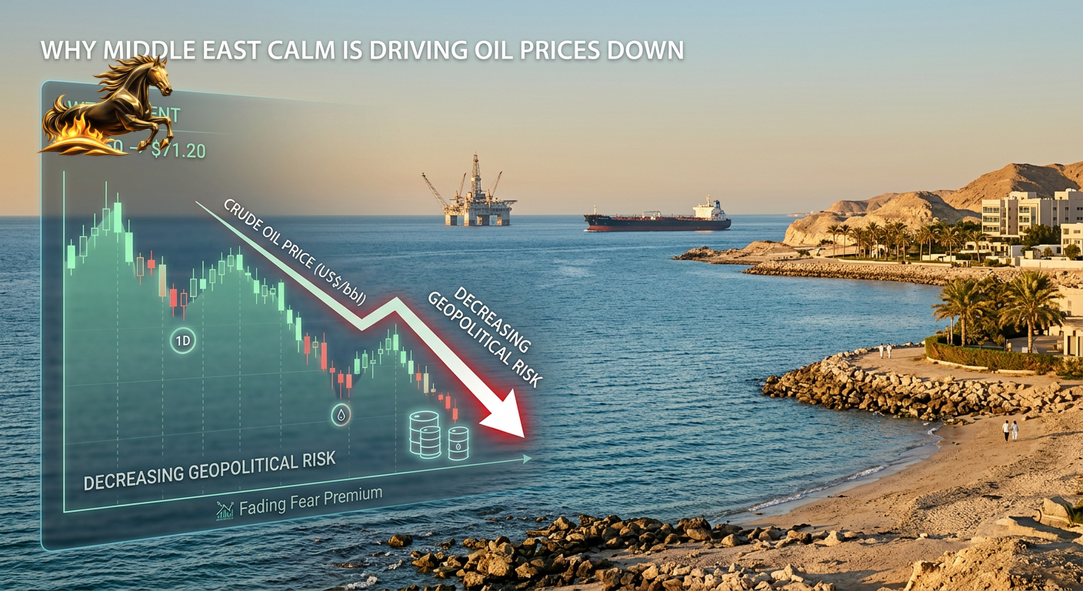
When the Middle East is calm, the risk of supply disruption drops, cutting the ‘fear premium’ that pushes oil prices up.
Oil prices don’t just reflect current supply and demand—they also factor in what traders worry might happen. Conflict near oil fields, pipelines, or shipping lanes spikes fears. Buyers then pay more upfront, adding a “geopolitical risk premium” or “fear premium” to the price.
When tensions ease, this premium shrinks, and oil prices fall accordingly.
Picture steady oil pricing based on supply and demand. A crisis near a big producer triggers fear, so prices jump. When calm returns and oil flows smoothly, those extra costs evaporate, bringing prices down.
Why the Middle East Holds So Much Weight in Oil Markets
Two big reasons:
- It’s home to major oil producers: Saudi Arabia, Iraq, UAE, Kuwait, Qatar, and Iran export huge volumes globally.
- It contains vital shipping chokepoints: Places like the Strait of Hormuz and Bab el-Mandeb funnel roughly 20% of the world’s oil shipments.
Disruptions here force costly detours, higher shipping fees, and insurance hikes—all of which push up oil prices.
So markets react not only to actual cuts but also to potential supply threats.
What’s the “Fear Premium” Anyway?
The “fear premium” is the extra cost added to oil prices due to geopolitical uncertainty.
Oil prices balance many forces: supply, demand, inventories, OPEC+ decisions, currency moves, interest rates, speculation, and geopolitical risks.
When tensions or sanctions threaten supply, prices often rise even before oil physically tightens in the market. Traders hedge risks, airlines lock in fuel costs, and refiners protect themselves, adding upward pressure—the “fear premium.”
When threats calm down, these defensive bets unwind, returning focus to supply and demand fundamentals. This lowers the premium—and oil prices fall.
How Middle East Calm Brings Oil Prices Down
1. Lower Risk of Supply Interruptions
Calm means stable production and open shipping, so the risk premium shrinks.
2. Reduced Shipping and Insurance Costs
Peace lowers tanker insurance and security expenses, easing price pressure.
3. Traders Unwind Defensive Moves
Speculators sell off hedges taken during risky times, helping push prices down.
4. Easing Inflation Worries
Oil price spikes stoke inflation fears; calmer oil costs reduce that risk and boost economic confidence.
5. Renewed Focus on Demand
With geopolitical fears fading, traders weigh demand trends more closely, which can further soften prices.
What Lower Oil Prices Mean for You
Will lower oil prices immediately cut your fuel bill? Not straight away. Retail prices depend on local taxes, refinery capacity, currencies, and stock levels.
But if crude prices stay down, consumers generally enjoy cheaper fuel over time. This lightens the load on household energy budgets, especially where fuel costs matter most.
Why Businesses Care About Oil Prices Falling
- Airlines on jet fuel
- Logistics companies on diesel
- Manufacturers on energy inputs
- Retailers on shipping
- Agriculture and construction on operational costs
These savings boost margins and help cool inflation throughout the economy.
What Investors Should Watch
Oil prices signal:
- Inflation trends
- Corporate earnings impact (producers vs. consumers)
- Economic health indicators
A drop from Middle East calm signals reduced risk—a positive sign. But a decline due to weaker demand can warn of recession.
Calm Doesn’t Mean Risk-Free
Remember, calm lowers the geopolitical risk premium but doesn’t erase all uncertainties. Prices remain sensitive to:
- New conflicts or escalations
- Shipping lane attacks
- OPEC+ production changes
- Unexpected supply issues
- Strategic reserve policies
- Global demand shifts
- Currency and economic data
- Weather and refinery problems
This complexity means calm is just one piece of the oil pricing puzzle.
Creating a High-Impact 1-Minute Vertical Video
For Douyin, Xiaohongshu, or WeChat success, your video should:
- Grab attention right away
- Explain simply and clearly
- End with a useful takeaway
Try a hook like:
“Oil prices are dropping — could your fuel costs follow?”
Use simple visuals: falling oil charts, a Middle East map highlighting key tanker routes, gas station price signs.
Keep text short:
“Middle East calm”
“Less risk, lower fear premium”
“Cheaper fuel ahead?”
Wrap up by reminding viewers: less geopolitical tension cuts the fear premium, but supply, demand, and policy remain crucial.
Sample 60-Second Script
“Oil prices are falling as tensions in the Middle East ease. Here’s what that means for your fuel bill.
The Middle East is a huge oil producer and controls key shipping routes. When conflict threatens supply, prices often spike.
When things quiet down, markets worry less about supply disruptions. That lowers the ‘fear premium’ in oil prices. If exports keep flowing smoothly, traders don’t bid prices up.
Lower oil can lead to cheaper fuel over time. For businesses like airlines and logistics, this reduces costs and eases inflation.
But calm doesn’t erase all risks. OPEC+ decisions, global demand, and inventories still steer oil prices.
The key: less Middle East risk means less fear premium—and usually lower prices. Follow for clear, quick market insights.”
Final Thought
Middle East calm reduces the geopolitical risk premium that inflates oil prices. This eases pressure on crude and fuel costs, benefiting consumers, businesses, and markets alike. Yet oil remains sensitive to many factors beyond geopolitics.
Less Middle East tension means less fear in oil markets — and that typically leads to lower prices. But supply, demand, and policy choices will always shape oil’s path.
This clear, balanced explanation equips your audience to understand oil price moves and creates engaging short videos that inform and retain viewers.
