
Australia’s Bitumen Crisis: Why It Could Upend Your Business
Bitumen might seem like a concern only for road builders, but its impact spans well beyond the construction industry. This sticky, black petroleum product binds asphalt and forms the backbone of Australia’s infrastructure—supporting roads, freight networks, industrial sites, and crucial access points that keep the economy running smoothly.
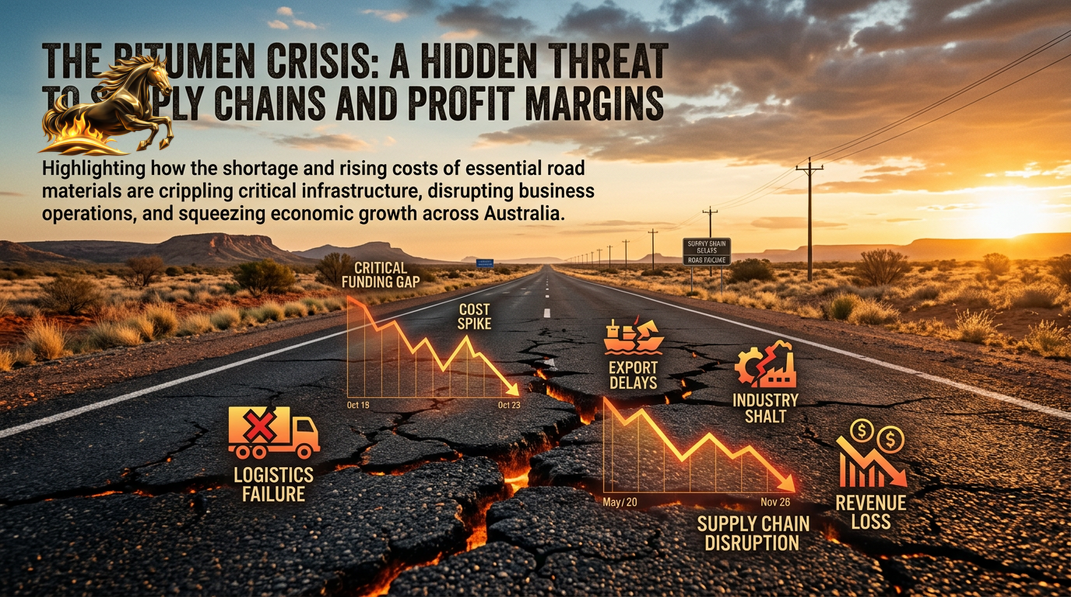
When bitumen supplies tighten and prices rise, it’s not just roadworks that suffer. Businesses across various sectors face higher transport costs, project delays, supplier price hikes, and squeezed profit margins. For companies already challenged by inflation, labor shortages, and supply chain disruptions, the looming bitumen crisis is a hidden but serious threat.
In this article, we dive into Australia’s bitumen crisis, explore its wide-ranging effects, and share practical strategies business leaders can implement to reduce risk and stay resilient.
What Is Bitumen—and Why Your Business Should Care
Bitumen is a thick, petroleum-based binder essential for making asphalt. Combined with crushed rock and sand, it creates durable, weather-resistant roads, airport runways, pavements, and more.
Though often overlooked, bitumen is critical in:
- Highways and urban streets
- Airport runways and taxiways
- Freight terminals and port access roads
- Industrial estates, warehouses, and loading bays
- Mine haul roads and access routes
- Waterproofing and certain industrial applications
- Large infrastructure projects
Simply put, bitumen keeps people, goods, and projects moving efficiently. Any shortage or price hike ripples through businesses that rely on transport or infrastructure access—from retailers and manufacturers to councils and logistics providers.
The key takeaway: even if you don’t purchase bitumen directly, its availability and cost impact your operations.
Why Australia’s Bitumen Supply Is Under Pressure
Australia’s bitumen crisis stems from a mix of global vulnerabilities and domestic challenges.
The country depends heavily on imported refined petroleum products—including bitumen. This reliance means shipping delays, refinery output changes, geopolitical tensions (especially in the Middle East), and volatile global prices all directly affect local bitumen supply and cost.
A critical chokepoint is the Strait of Hormuz, through which roughly 20% of global oil shipments pass. Any conflict or disruption here sends shockwaves through energy markets, tightening bitumen availability.
Adding to this, Australia’s domestic refinery capacity has steadily declined over the past two decades. Several refineries have closed or converted to import-only terminals, further increasing dependence on overseas supply with limited buffer stocks.
In short, Australia faces a fragile bitumen supply chain vulnerable to international shocks and internal constraints.
The Bitumen Supply Chain: More Complex Than You Think
Australia’s geographical isolation adds layers of complexity to sourcing bitumen.
The supply chain includes:
- Oil extraction and refining
- Export shipping of bitumen or its precursors
- Port unloading and storage
- Compliance testing to meet Australian quality standards
- Domestic transport to asphalt plants
- Delivery scheduling for construction and maintenance projects
Delays or disruptions anywhere in this chain—from tanker arrivals to quality checks—can drive up costs, reduce quote validity, and postpone project starts.
For businesses, this means that even minor global incidents can quickly create local operational headaches.
Why Quality Standards Matter More Than Ever
Not all bitumen is created equal—technical standards ensure asphalt performs in Australia’s unique climate, heavy traffic, and safety conditions.
In tight supply situations, emergency imports from nonstandard sources might be necessary. But these may require blending, have differing performance under Australian heat, or cause contractors to hesitate in offering warranties.
Using substandard materials risks higher maintenance costs and shorter infrastructure lifespans, pushing expenses onto businesses and communities down the line.
This highlights that cutting corners on bitumen quality or rushing procurement can carry costly hidden risks beyond initial savings.
The Economic Impact of Rising Bitumen Prices
As bitumen prices rise, asphalt costs follow, affecting budgets across the board.
Road projects, parking lots, hardstands, and site accesses may face overruns, contract renegotiations, delays, or even scaled-back scopes.
Local councils with tighter road maintenance budgets might postpone repairs, leading to worsening roads, traffic disruption, and greater vehicle wear and tear.
Fixed-price contracts common in construction mean contractors often absorb rising input costs, sparking disputes and schedule delays.
For businesses, prices quoted months earlier may no longer hold true, bringing financial and operational headaches.
Beyond Road Builders: How Your Business Feels the Impact
It’s easy to think bitumen supply problems only affect government roadworks and asphalt contractors. However, roads are the backbone of Australia’s economy, so higher bitumen prices trigger chain reactions:
Freight and Logistics Costs Rise
Transport companies face increased fuel, repair, and congestion costs—passed on as higher freight rates.
Construction Projects Stall
Material shortages delay subdivisions, commercial developments, and infrastructure projects, disrupting revenue flows and operational plans.
Suppliers Raise Prices
Increased transport and maintenance costs push suppliers to hike prices, often without overt connection to bitumen.
Councils Delay Maintenance
Tight budgets mean deferred repairs, worsening access, and more disruption near business locations.
Public Infrastructure Timelines Shift
Governments prioritize critical projects, slowing broader rollouts and impacting jobs and investment.
The Silent Danger: Margin Compression
Beyond specific shocks, escalating costs combined with revenue delays naturally squeeze profit margins.
Even stable sales can’t offset rising freight fees, supplier hikes, and contract renegotiations. Smaller businesses often lack leverage to pass these costs onto customers.
Recognizing bitumen supply challenges as part of your wider operational risks is crucial to protecting your margins.
Which Industries Are Most at Risk?
- Construction and Civil Contractors: Navigating material shortages and fixed-price contract pressures.
- Property Developers: Coping with unpredictable civil work costs and delays.
- Logistics and Transport Operators: Dependent on road quality and timely maintenance.
- Retailers and Wholesalers: Hit by higher freight costs and access disruptions.
- Agriculture and Food Supply: Vulnerable to deteriorating regional roads.
- Mining and Resources: Reliant on reliable haul roads.
- Councils and Public Agencies: Managing tough maintenance decisions amid budget pressures.
- SMEs with Site Works: Facing unexpected costs and scheduling difficulties.
Actionable Steps to Manage the Bitumen Crisis
While the bitumen crisis is daunting, it can be managed with smart planning.
- Review Logistics and Freight Contracts
Understand surcharge clauses and model potential cost increases for budgeting and pricing. - Engage Early with Suppliers
Confirm lead times, quote validities, and escalation terms to avoid surprises. - Build Budget Buffers
Plan for material price hikes, delays, and change orders. - Assess Contract Escalation Clauses
Ensure clear mechanisms for input cost adjustments to limit disputes. - Diversify Your Supplier Base
Identify alternative contractors and freight providers to reduce reliance on single sources. - Optimize Inventory and Delivery Schedules
Prioritize critical materials to mitigate logistical shocks. - Monitor Local Infrastructure Projects
Stay ahead of roadworks impacting access and communicate accordingly. - Adjust Pricing Strategies
Use staged increases or delivery surcharges with transparent communication to protect margins. - Strengthen Risk Management and Reporting
Integrate supply chain and infrastructure risks into your business oversight.
Looking Ahead: Building Resilience
The bitumen crisis goes beyond construction materials; it’s a test of business resilience and adaptability.
Companies who plan ahead, communicate clearly, and manage risk strategically will reduce disruption and maintain a competitive edge.
Embedding infrastructure risk into overall business planning safeguards operations amid volatile markets and complex supply chains.
Conclusion: Infrastructure Risk Is Business Risk
Australia’s bitumen shortage teaches a vital lesson: infrastructure material costs and availability affect every corner of the economy.
For businesses, infrastructure should be a core part of strategic risk management—not an afterthought.
Stay alert, proactive, and flexible to avoid being blindsided by supply shocks that impact roads, freight, projects, and ultimately your bottom line.
By understanding the causes and repercussions of the bitumen crisis—and acting early—your business can navigate this challenge and come out stronger. This is resilience in action within today’s interconnected economy.
